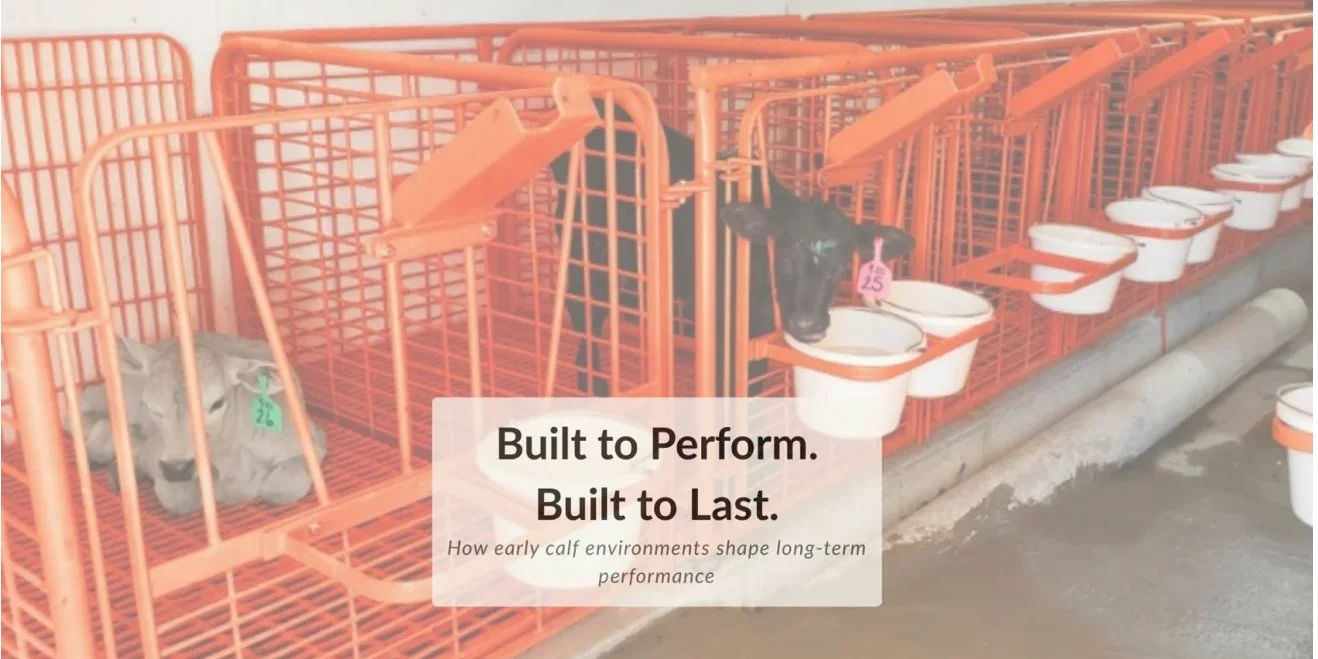
Part of the “Built to Perform. Built to Last.” series, exploring long-term performance in early calf environments.
Genetic progress represents an investment made long before a calf enters its first housing environment.
Breeding decisions, genomic testing, reproductive technologies, and years of selection all contribute to the potential carried by a newborn calf. Once that calf arrives, protecting the investment shifts from selection to management.
For genetics and seedstock operations, protecting that potential means looking beyond the breeding decision to the environment where the calf’s development begins.
Colostrum, nutrition, sanitation, observation, air quality, bedding, and disease prevention all become part of the picture. The environment is one of many factors influencing how well that calf can develop and perform.
Protecting the Investment Starts Early
Every newborn calf represents future potential. For genetics and seedstock operations, an individual animal may also represent years of breeding decisions or a mating selected to advance specific goals within the herd.
That makes the early calf period particularly important.
Producers cannot control every variable a calf will encounter. However, they can create an environment that supports consistent daily care.
Clean, dry housing helps manage environmental exposure. Good airflow supports moisture management and air quality. Easy access makes observation more practical. Efficient layouts help employees carry out feeding, bedding, cleaning, and health protocols consistently.
Genetic potential begins with breeding decisions. Protecting that potential continues with the environment and management surrounding the calf.
Consistency Creates a Stronger Starting Point
Consistency matters in every calf program. When significant thought and investment have gone into genetics, creating a dependable environment helps provide those calves with a strong starting point.
Sanitation, bedding, airflow, feeding routines, and observation all contribute to the conditions calves experience each day.
When those elements remain consistent, producers can reduce unnecessary environmental variation around the animals they have invested in developing.
That does not change the genetics or guarantee future performance. Instead, it creates a more dependable foundation for nutrition, health protocols, and daily management.
Consistency doesn’t change genetics. It helps create conditions where management can support the potential already there.
Individual Observation Carries Added Value
Some of the most important information in calf care comes from simply noticing when something changes.
A calf may approach a feeding differently, become less active, or behave differently than it did the previous day. Those subtle changes can signal that a closer look is warranted.
Effective observation depends partly on practical access.
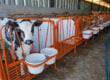
Housing that allows employees to see and reach calves easily can make observation a natural part of feeding, bedding, cleaning, and other routine chores. Instead of creating another task, the environment can help build observation into the normal workflow.
For genetics and seedstock operations, close observation can carry added value because an individual calf may play an important role in the future breeding program.
The value of good calf housing isn’t only in what it provides the calf. It’s also in what it allows the people caring for that calf to see and do.
Supporting Health and Biosecurity Protocols
For operations investing heavily in genetics, protecting youngstock health remains an important part of protecting long-term value.
Housing cannot create biosecurity on its own. Thoughtful design can, however, make sanitation and animal-management protocols easier to carry out consistently.
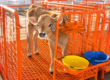
Cleanable surfaces support effective sanitation. Practical layouts can help employees move through daily routines efficiently. Individual housing, when appropriate to the operation’s management strategy, can also help manage direct calf-to-calf contact.
Durable materials matter as well. Surfaces that remain intact and cleanable through repeated use help support sanitation protocols over the life of the system.
The goal is not to replace strong health management with housing. It is to create an environment that supports the protocols already in place.
Taking the Long View
Genetics programs are built with a long view.
Breeding decisions made today may influence the herd for years. Investments in selection, reproductive technologies, and youngstock development often reflect goals that extend well beyond the current season.
Evaluating the calf environment through the same lens changes the conversation.
Purchase price still matters, but so do cleanability, durability, workflow, maintenance, and how effectively the system supports daily management throughout its useful life.
Will surfaces remain practical to clean? Will employees still be able to work efficiently within the system years from now? Can the environment continue to support changing management needs?
A housing component may last for years, but longevity alone does not define value. Long-term performance depends on how well the system continues to do its job throughout those years.
For an operation already accustomed to making decisions with future generations in mind, that perspective is familiar.
Creating the Conditions for Potential
Genetics establish possibilities. What happens next depends on many factors, including nutrition, health, management, and environment.
Calf housing represents only one part of that equation. Yet it surrounds many of the activities that influence the calf every day.
A well-designed environment can support sanitation, airflow, moisture management, observation, and efficient daily care. More importantly, it can help employees deliver those practices consistently.
For genetics and seedstock operations, that consistency helps protect an investment that began long before the calf was born.
A System Built to Perform
Genetics and seedstock programs are built around decisions that look years into the future. Calf environments deserve the same long-term thinking.
That philosophy aligns with ADA’s “Built to Perform. Built to Last.” approach to early calf environments. A well-designed calf environment cannot determine an animal’s future, but it can support the consistent care, observation, and management that help protect the investment already made.
The goal is not to ask for housing to create genetic potential. That work has already begun through thoughtful breeding decisions. The opportunity is to create an early environment that supports what comes next.
When considerable thought goes into creating the next generation, the environment that receives that generation deserves the same attention.
Explore calf stalls, calf flooring, and calf equipment at ADAENT.net