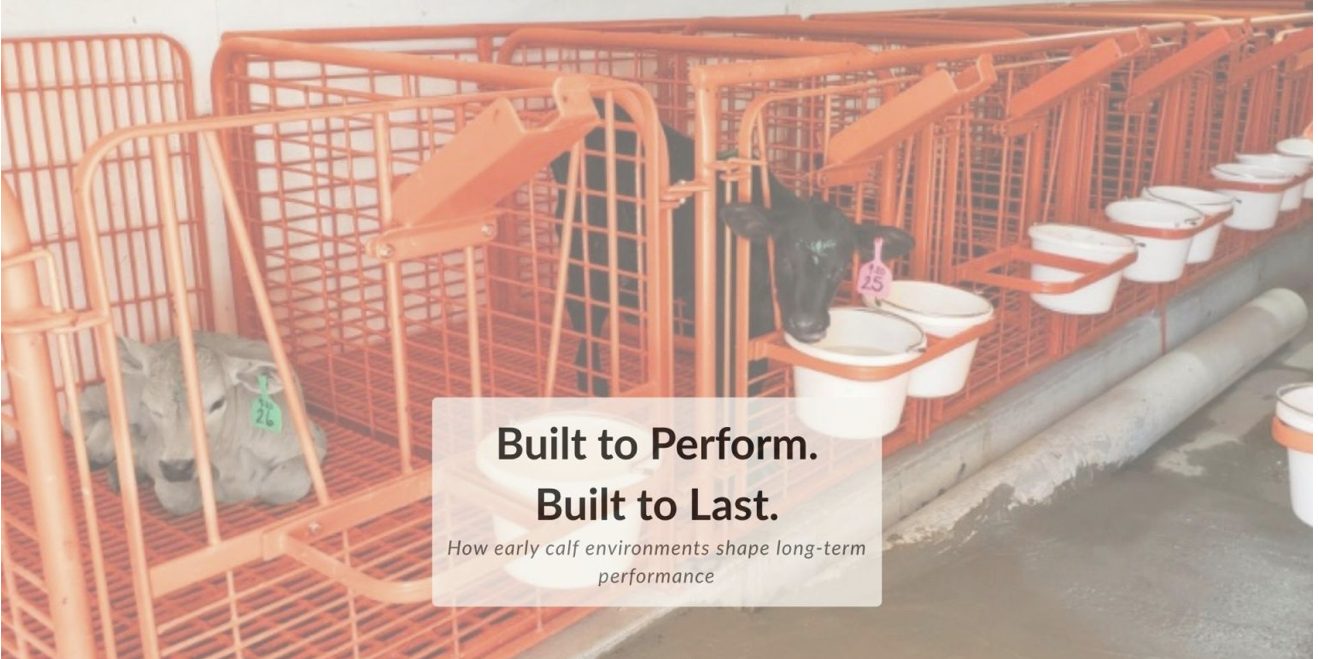
Part of the “Built to Perform. Built to Last.” series, exploring long-term performance in early calf environments.
Zero calf loss is an outcome every producer would welcome. But it does not come from one piece of equipment, one protocol, or one management decision.
Calf survival reflects many factors working together: colostrum and nutrition, sanitation, observation, housing, disease prevention, and daily care.
That makes zero an interesting benchmark. Rather than looking for a single factor behind exceptional results, a more useful question may be: what can we learn from calf programs that consistently achieve strong survival and health outcomes?
Often, the answer is not one dramatic change. It is many small advantages working together.
Zero Is an Outcome, Not an Intervention
Housing alone cannot guarantee calf survival. What it can do is create an environment that supports consistent management.
A clean, dry space helps limit unnecessary pathogen exposure. Good airflow supports moisture management and air quality. Easy access gives employees opportunities to observe calves closely, while efficient layouts make routine care easier to repeat.
None of these elements determines an outcome on its own. Together, however, they create an environment that supports both the calf and the people responsible for its care.
Zero loss isn’t a feature of a housing system. Strong outcomes become more achievable when the environment consistently supports the calf and the people caring for it.
Small Advantages Add Up
Strong calf programs often depend on details that seem relatively small on their own:
- Dry bedding supports calf comfort while helping manage moisture.
- Cleanable surfaces make sanitation easier to execute consistently.
- Effective airflow helps maintain the calf’s immediate environment.
- Practical layouts make feeding, cleaning, and observation more efficient.
Individually, each represents one piece of daily management.
Together, they create layers of support.
For a young calf with a developing immune system, those layers matter. An environment that supports cleanliness, dryness, air quality, and consistent care allows nutrition and herd health protocols to work within more favorable conditions.
Just as small challenges can accumulate, small advantages can compound over time.
Consistency Changes the Equation
Strong protocols matter, but their value depends on how consistently teams can carry them out.
When routine tasks are straightforward, employees can spend less time navigating the environment and more time focused on the calves themselves.
That difference may seem small during a single feeding or cleaning. Repeated across calves and chores every day, however, efficiency creates something valuable: time and opportunity for consistent care.
Systems that simplify routine work make it easier for teams to repeat good practices from calf to calf and day to day.
The goal is not to remove people from calf care. It is to create an environment that helps them do their jobs effectively and consistently.
Make Good Observation Easier
Some of the most valuable moments in calf care happen before there is an obvious problem.
A calf may be slower to rise, show less interest in feeding, or simply behave differently than it did the day before. Subtle changes can provide useful early signals, but recognizing them depends on having opportunities to observe calves consistently.
Housing and workflow can support that process.
Easy calf access and practical layouts create natural opportunities for observation during routine chores. Efficient systems also give employees more time to look at the calf rather than focus entirely on completing the task around it.
Earlier recognition allows producers and their herd health teams to assess changes and determine an appropriate response.
Sometimes the value of an efficient system is not simply how quickly a task gets done. It’s what employees have time to notice while doing it.
Create an Environment That Supports Good Management
Every calf program operates in changing conditions.
Weather shifts. Pathogen pressure varies. Labor availability changes. Individual calves respond differently, even when they receive similar care.
Housing cannot eliminate that variability. However, thoughtful design can help create a more consistent foundation for managing through it:
- Durable, cleanable materials support sanitation.
- Effective drainage and bedding management help control moisture.
- Appropriate airflow supports air quality.
- Practical layouts make routine care easier to carry out.
These individual elements become more valuable when they work together.
Good housing does not replace good calf management. Instead, it supports the people and protocols already responsible for delivering it.
What Zero Can Teach Us
Zero loss is a powerful benchmark, but it isn’t a promise. Even well-managed calf programs can face disease challenges or individual animals that need additional care.
The value of the benchmark lies in the questions it encourages producers to ask:
- What aspects of the environment consistently support calf health?
- Where can routine care become easier to deliver?
- Can employees observe calves efficiently?
- Do housing, sanitation, airflow, and moisture management work together?
These questions move the conversation beyond a single outcome and toward continuous improvement.
They also reinforce an important lesson: strong calf outcomes rarely result from one dramatic intervention. More often, they reflect many small things going right, consistently, over time.
A System Built to Perform
Calf housing represents only one part of a successful calf program, but it influences many of the activities that happen within it every day.
Well-designed environments can support sanitation, airflow, moisture management, observation, and efficient daily care while giving employees a practical foundation for consistent management.
That thinking aligns with ADA’s “Built to Perform. Built to Last.” approach to early calf environments. Long-term performance isn’t about promising a specific health outcome. It’s about creating an environment that helps people deliver consistent care, day after day.
Zero calf loss may capture attention. The more meaningful goal is giving every calf the best opportunity to succeed.
Better calf outcomes rarely come from one thing going perfectly. They come from many small advantages working together, consistently, over time.
Explore calf stalls, calf flooring, and calf equipment at ADAENT.net