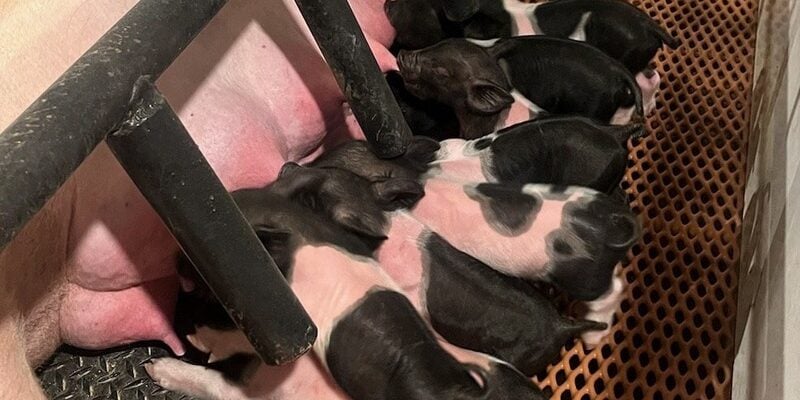
We walk through a lot of barns. Some of them have flooring that went in 20 years ago and still looks like it belongs there. Others have floors that are rusting at the weld joints, cracking where the coating peeled, or patched together with replacements that do not match the originals. The barns are roughly the same age. The pigs are roughly the same size. The difference is the hog barn flooring, and specifically, how it was manufactured before it ever left the factory.
That difference is not something most producers think to ask about. The catalog photo looks the same. The sales pitch sounds the same. But the steel grade, the coating process, the tolerances, and the quality checks that happen before a floor ships are what separate a 10-year floor from a 30-year floor. This article breaks down what to look for so the next flooring decision is the last one for a long time.
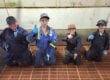
I recently sat down with Bryant Dagstead, our Operations Manager, and Jesse Halfpop, our Shop Manager, here at ADA Enterprises to talk through what these quality markers look like inside our facility. That conversation is worth watching if you want to see it firsthand.
What Your Floor Is Made of Matters More Than You Think
Not all steel is the same. When you are evaluating hog barn flooring, ask what grade of steel the manufacturer starts with. Prime steel holds a consistent grain structure, which means it accepts coatings more uniformly and resists fatigue under repeated load and wash-down cycles. Recycled or secondary steel costs less, but the tradeoff is inconsistency in how it bonds with the coating. If the bond is uneven, the coating fails unevenly. That is how bare spots start, how rust creeps in, and how a floor ends up looking five years older than it is after two seasons of production.
At ADA, we have been starting with prime steel on every floor since 1974. Our raw materials come from Iowa, Missouri, and Wisconsin. Brian confirmed during our conversation that everything is Midwest-sourced, which also means shorter lead times on raw materials and fewer supply chain disruptions.
Where the steel comes from connects directly to how long it holds up. I wrote about that generational durability in Flooring Built for the Next Generation of Farmers. The principle is straightforward: what goes in determines what comes out.
Ask About Tolerances. Most Manufacturers Will Not Bring It Up.
A floor that does not fit your pit correctly creates gaps where piglets can catch legs, edges that do not sit flush, and stress points where the frame flexes unevenly under load. When you are ordering custom flooring, ask what tolerances the manufacturer holds.
ADA holds internal tolerances to plus zero, minus one sixteenth of an inch. We market our custom products as built to within one eighth of an inch, but the shop floor holds itself tighter than what we promise. Jesse explained why. The coating adds thickness, so if fabrication is dead on at a sixteenth under, the finished product lands exactly at spec.
What most manufacturers will not tell you is how they catch errors before they ship. Brian described our system as an “internal customer” chain. The fabrication team treats the welding team as their customer. If parts do not fit, they go back. The welding team treats the coating line as their customer. The coating line’s customer is the shipping department, who run final QC. Every employee has the print. Every employee knows what every dimension is supposed to measure. There is no step in the process where someone is guessing.
Every welder at ADA goes through a weld spec test before they are hired. Flat weld. Vertical down. Then they weld around a pipe to prove the seal is airtight, because if plastisol gets inside an unsealed pipe during the dip process, it creates bubbles that show up as defects on finished floors.
The Coating Process Is Where Cheap Flooring Reveals Itself
If you learn one thing from this article, let it be this: the coating process determines how long your hog barn flooring lasts. Two questions to ask any manufacturer.
Is the floor coated before or after welding? Manufacturers who coat individual components and then weld them together leave bare steel at every joint. Those exposed weld points are where moisture, manure acids, and corrosion enter. Within a few years, rust starts working from the inside out at exactly the spots that bear the most structural load. At ADA, every floor is fully dipped into liquid plastisol (polyvinyl) after welding. The coating encases every joint, every brace, every leg. No exposed metal anywhere.
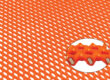
How is the coating cured? Brian explained it simply. The goal is to make the plastic harder than whatever is going to be rubbing against it. ADA oven cures at high temperatures to bond the plastisol and steel into a single material. A properly cured floor comes out with a visible shine. That shine is not cosmetic. It is the indicator that the bond is complete and the surface is hard enough to outlast decades of hoof traffic and pressure washing. A dull finish on plastisol-coated flooring means it was under-cured or has already started wearing. Brian put it plainly: “If you’re looking dull, it’s either been worn down or it wasn’t cured properly.”
All Dura Trac flooring now includes antimicrobial protection that inhibits the growth of E. coli, Salmonella, and other microbials. That protection is built into the plastisol itself, not applied as a surface treatment.
How Hog Barn Flooring Types Compare
Not every operation needs the same flooring, but every operation needs to understand the tradeoffs. Here is how ADA’s Dura Trac floors compare to the alternatives based on the factors that affect your bottom line.
| Factor | ADA Dura Trac (Plastisol-Coated Steel) |
Clip-Together Hard Plastic | Concrete Slats | Woven Wire |
|---|---|---|---|---|
| Durability | 25-30 years. Prime steel, post-weld dip coating, oven cured. No exposed metal, no rust entry points. | 10-15 years. Clips and joints degrade, individual panels crack and need replacement. | 20+ years structurally, but surface degrades. Micro-cracks harbor pathogens. | 5-10 years. Wire corrodes and wears, creating sharp points and uneven surfaces. |
| Traction | Waffle pattern provides natural grip without abrasive texture. Reduces floor-related injuries to sows and piglets. | Smooth plastic surface can become slippery when wet. | Abrasive when new, slippery when worn. Both cause injuries. | Inconsistent. Wire spacing affects footing. |
| Thermal performance | Plastisol stays at room temperature. Conserves animal body heat instead of conducting it away. | Better insulation than bare metal. Warmer surface for piglets. | Cold. Conducts heat away from the animal. Increases cold stress and feed conversion loss. | Cold. No thermal benefit. |
| Cleanability | Oven-cured surface resists bacterial growth. Manure drops through openings. Supports high-pressure wash-down. Antimicrobial protection inhibits E. coli and Salmonella. | Clips and joints trap bacteria underneath panels. Difficult to fully sanitize between groups. | Absorbs urine and moisture into micro-cracks. Difficult to fully sanitize. | Good drainage, but wire is difficult to sanitize thoroughly. |
| Install time | One piece per crate side. Contractors report 7x faster install than clip-together plastic. | 30+ interlocking pieces per crate. Labor-intensive assembly. | Heavy. Requires equipment to place. | Moderate. Requires frame and fastening. |
| Custom sizing | Built to your pit dimensions at ADA’s Northwood, Iowa facility. Tolerances held to 1/16″ internally, marketed at 1/8″. | Limited to standard panel sizes. Your facility adapts to the floor. | Standard mold sizes. Custom pours are expensive. | Can be cut to size, but edges fray. |
The difference in the Dura Trac column comes back to what we covered earlier in this article. The prime steel, the post-weld dip process, the oven cure, the tolerances. Those manufacturing decisions are why the same material category (plastisol-coated steel) performs differently depending on who makes it. Not all plastisol-coated floors are built the same way.
The flooring that costs less upfront is rarely the flooring that costs less over 20 years. When you factor in replacement cycles, labor for cleaning, and the production losses from cold stress and floor-related injuries, the math shifts. ADA’s own data puts the first-year return on Dura Trac flooring at $252.50 per crate over competitor products, broken down as $121.50 in installation labor savings, $88.50 in reduced wash-down time, and $42.50 from a 4% reduction in pre-wean mortality. Those numbers are based on 2024 USDA averages for employee cost and weaned pig value.
What a 30-Year Floor Looks Like in the Barn
Everything above translates directly into what you experience when the floors arrive.
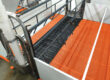
A Dura Trac floor shows up as one piece per side of the crate. Off the truck, into the pit, bolt it down, done. No clips, no assembly, no interlocking components to fumble with underneath a sow that does not want to be there. Contractors report that Clearspan Nursery floors install seven times faster than clip-together alternatives.
One-piece construction means no seams for bacteria and no joints for corrosion. Your employees spend less time scrubbing, and the barn stays cleaner between groups. ADA’s flooring is also built with the biosecurity standards I see more producers asking about every year. If you want to go deeper on how flooring connects to your overall biosecurity program, that is worth reading.
ADA builds farrowing floors and nursery floors to your exact pit dimensions. If your barn has an odd layout from a remodel two decades ago, we build to your spec with a four-week lead time from approved drawing to shipment.
When I asked Brian what he hoped a producer experiences after installing our flooring, he said something I keep coming back to: “I hope they just forget about us because they don’t got to worry about the flooring. It works. And they got other problems to worry about.” That is what a 30-year floor gives you. Not just durability, but the freedom to focus on the hundred other things that need your attention in a barn.
Talk to Us
If you are building, remodeling, or replacing hog barn flooring, I would like to help you figure out the right setup. We manufacture everything to spec in Northwood, Iowa, and I can walk you through options, sizing, and lead times.
Contact me directly:
Josh Couch
Swine Sales Manager, ADA Enterprises
josh@adaent.net | 641-900-6011
Or request a quote to get started.