Part of the “Built to Perform. Built to Last.” series, exploring long-term performance in early calf environments.
For years, calf housing has often been viewed as a temporary stage — a place to get animals started before the real work of dairy production begins. But that way of thinking is rapidly changing.
A critical component of the early calf care environment is ensuring that every newborn calf receives high-quality colostrum. Colostrum quality, particularly its immunoglobulin (IgG) concentration and low bacterial contamination, is essential for a newborn calf’s survival as it provides critical nutrients and passive immunity. Calves should receive 4 quarts of high-quality colostrum within the first hour of life to ensure adequate immunity. At birth, the calf’s digestive system is underdeveloped and functions primarily through the abomasum for digestion, making timely and proper colostrum intake vital for health and growth.
Today’s producers are operating in a far more demanding environment. Labor is tighter. Disease pressure is more complex. Replacement costs are higher. And consistency is harder to maintain at scale. In that context, the early calf phase is no longer just a starting point — it has become one of the most important leverage points for long-term herd performance.
What happens in the first weeks and months of a calf’s life does not stay confined to that window. It shows up later in health outcomes, growth uniformity, labor efficiency, and lifetime productivity. The early care environment for calves is the most critical factor in determining their long-term health, growth, and future productivity as adult cows. Increasingly, producers are realizing that those results are not driven by management alone. They are shaped — and often limited — by the environment itself.
From Calf Housing Structures to Systems
Historically, calf housing decisions were often evaluated as structures. Does it provide shelter? Is it affordable? Can it be installed quickly?
Progressive operations are asking different questions today:
- Can this environment be cleaned thoroughly and consistently?
- Does it support airflow and sanitation under real-world conditions?
- Will it perform the same way five or ten years from now?
- Does it reduce labor pressure rather than add to it?
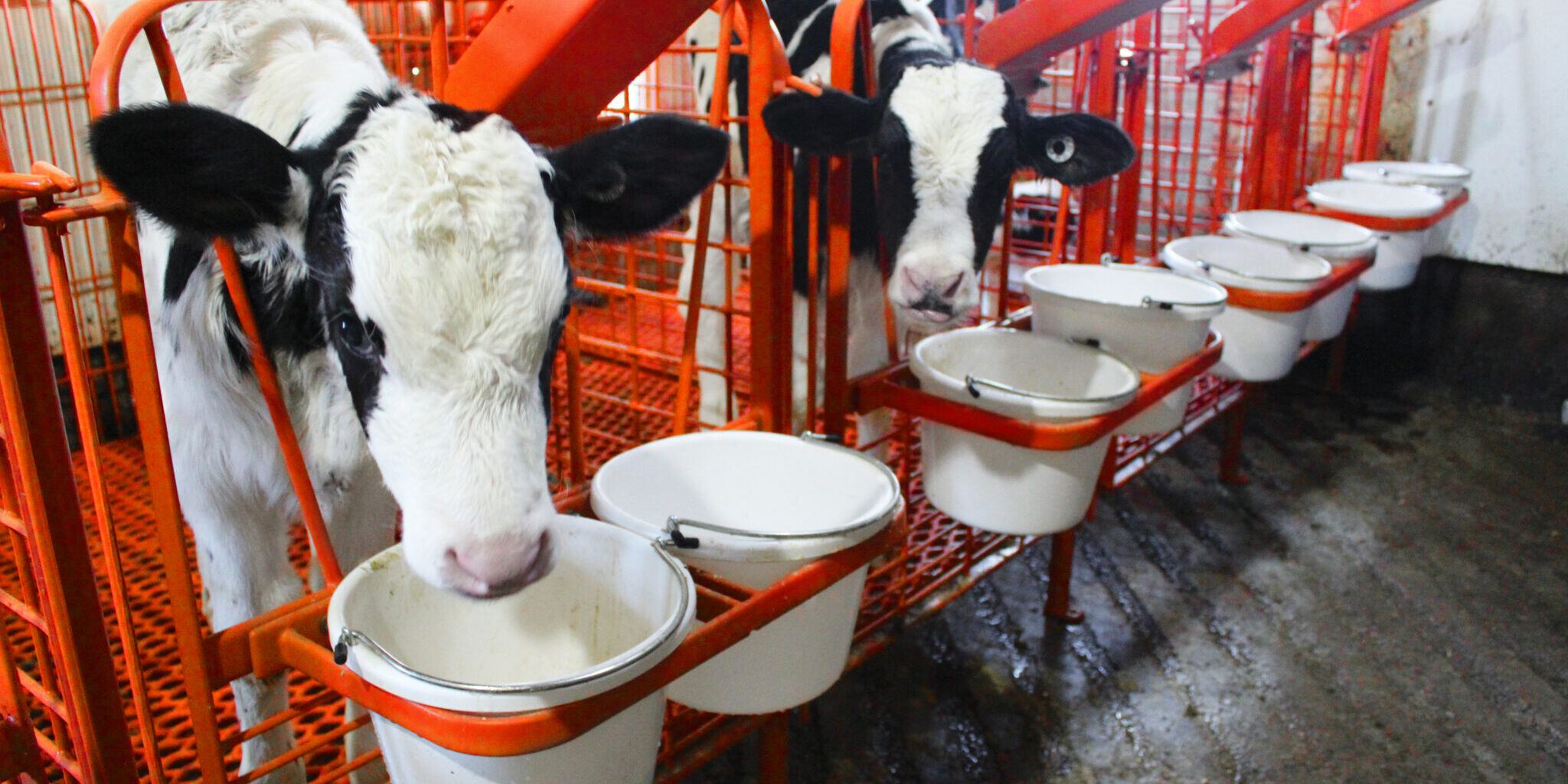
Calf pens should be designed to provide adequate space, ventilation, and hygiene to support calf health.
These questions reflect a broader shift in thinking. Early calf housing is no longer being judged as a standalone structure. It is being evaluated as a system — one that integrates materials, layout, airflow, cleanability, and durability into a repeatable process. To house calves effectively, calf housing should be completely separate from the main dairy housing barn and have separate ventilation to reduce disease transmission. Proper ventilation and separate air systems are critical to maintaining a healthy environment.
That distinction matters. Disease prevention, labor efficiency, and consistency are not the result of one good decision. They are the result of systems that hold up day after day, year after year. Poor ventilation in calf housing can lead to moisture buildup, increased ammonia, dust, and airborne pathogens, and inadequate air exchange. Effective air exchange is essential to remove ammonia, dust, and airborne pathogens from calf housing, and adequate ventilation is essential to reduce noxious gases and dust. Calves housed in poorly ventilated conditions are more prone to respiratory illness and other health issues.
Bedding and Ventilation: The Foundation of Healthy Growth
When it comes to raising calves, the basics matter more than ever. Bedding and ventilation are not just comfort features—they are the foundation of healthy growth for young calves. The right environment in calf housing can make the difference between thriving, healthy calves and a cycle of sick calves and setbacks.
Clean, dry bedding is essential for maintaining calf health. It helps calves maintain body temperature, especially during cold weather, and provides a barrier against moisture and bacteria that can lead to disease. Choosing the right bedding materials—such as wood shavings or straw—and ensuring they are changed regularly reduces the risk of bacterial growth and supports calf comfort. For smaller calves and newborn dairy calves, a well-managed bedding system is critical to prevent cold stress and support steady growth rates.
Ventilation is equally important. Good airflow in calf housing removes excess moisture, ammonia, and airborne pathogens, all of which can compromise calf health. Natural ventilation, when designed correctly, brings in fresh air and helps regulate air temperature, while mechanical ventilation systems can provide consistent air movement in larger or more enclosed barns. Proper ventilation reduces the risk of respiratory diseases and supports the overall well-being of calves fed milk or milk replacer.
Producers should regularly assess both bedding and ventilation as part of their management practices. Look for signs of dampness, monitor air quality, and adjust bedding and airflow as seasons change. Investing in these fundamentals not only supports the health and growth of your calves but also sets the stage for long-term success in your dairy replacements and milking herd.
By prioritizing clean bedding and effective ventilation, you create a calf housing environment built to perform—and built to last.
Disease Risk Pressure Starts Early
Calves are most vulnerable when their immune systems are still developing. Environmental stressors — moisture, poor air quality, residual pathogens, and inconsistent sanitation — can quietly undermine health long before clinical signs appear.
Too often, disease prevention strategies focus on protocols alone. But protocols can only be effective if the environment supports them. Surfaces that degrade, materials that corrode, layouts that trap moisture, or designs that are difficult to clean thoroughly all create friction between intention and execution. Proper cleaning and sanitizing of feeding equipment is essential to reduce disease risk, as contaminated buckets or bottles can be a source of infection.
Over time, that friction accumulates. Pathogens persist. Variability increases. And disease pressure becomes harder to control. All feeding buckets and bottles should be sanitized after every use with hot water and specialized detergents to further minimize disease risk.
The most effective early calf environments are not dependent on perfect execution every day. They are designed to support good outcomes even when conditions are less than ideal.
Labor, Consistency, and the Hidden Cost of Raising Calves Design
Labor remains one of the most constrained resources on dairy operations, and calf programs often feel that pressure first.
Environments that require extra steps to clean, move through, or maintain consistency do more than consume time. They increase the likelihood of shortcuts, missed details, and variation between groups of calves.
Design plays a quiet but powerful role here. When environments are intuitive to clean, durable enough to withstand aggressive sanitation, and laid out for efficient flow, consistency improves naturally. The result is not just labor savings, but fewer breakdowns in process and fewer surprises in outcomes.
In many cases, the real cost of early calf housing is not found in the initial investment. It is found in the daily effort required to make the system work.
Thinking Beyond the First Season for Calf Growth
One of the most common mistakes in evaluating early calf environments is judging success too early. An environment may perform well in its first season, but long-term performance tells a different story.
Corrosion, material fatigue, sanitation challenges, and structural wear all compound over time — often at the exact moment when replacement or retrofit becomes most disruptive. Producers who take a longer view are increasingly prioritizing environments designed not just to work today, but to perform consistently over many years.
That shift requires looking beyond upfront cost and asking harder questions about durability, lifecycle performance, and consistency at scale. Environments that support proper early care can significantly improve calf survival rates and, by ensuring optimal conditions during the first 3 months, reduce the risk of a calf being culled as a cow later in life.
A Long-Term Philosophy
Across the industry, the most successful early calf programs share a common understanding: early design decisions carry long-term consequences.
When environments are built to support sanitation, airflow, labor efficiency, and durability as an integrated system, performance improves — and those gains compound over time. This long-term, system-based thinking is the foundation behind how ADA approaches early calf environments, focusing on solutions that perform today and continue to deliver value well into the future.
Learn more at ADAENT.net