Midwest winters have a way of turning “small” calf-comfort problems into big, expensive health problems. If you’ve ever felt like scours and pneumonia spike after a cold snap—when the weather has already started to break—you’re not imagining it.
Here’s the barn-side truth: the early calf environment doesn’t just shape how calves look today. It shapes how they handle the next challenge. And one of the most overlooked links in that chain is cold, abrasive flooring—especially when it’s paired with moisture in calf pens.
This article breaks down what’s happening under the calf, why it matters, and how calf housing management choices (especially flooring) can reduce stress and support healthier calves all winter long.
Why calf environment matters in winter (more than you think)
The ideal calf environment is simple to describe and hard to deliver in winter:
- Dry lying area
- Draft-controlled air movement
- Clean contact surfaces
- Secure footing and comfort
- Low humidity and low ammonia
When any of those slip, the calf pays first—and you pay later. That’s why ideal calf housing conditions and early calf care environment decisions matter so much. Cold stress is rarely “just cold.” It’s cold + wet + friction + stress, all at once.
The chain reaction: cold + moisture + abrasive footing
1) Cold stress drains energy and weakens defenses
A newborn calf is learning calf temperature regulation in real time. When temps drop below a calf’s comfort zone—especially if there’s wind, dampness, or poor bedding—more feed energy gets burned to stay warm. That means less energy available for growth and calf immune system development.
This is the heart of cold stress in newborn calves and why “how cold is too cold for calves” depends heavily on whether the calf is dry, sheltered, and able to rest comfortably.
2) Wet bedding turns cold into a health multiplier
Moisture in calf pens is one of the most consistent drivers of winter problems. Wet bedding isn’t just uncomfortable—it increases heat loss and raises pathogen pressure.
Common downstream issues from wet bedding calf problems include:
- Higher exposure to environmental bugs (think environmental causes of calf scours)
- More skin irritation and dirty udders/bellies from constant contact
- A harder time keeping calves warm in winter even with more feed
If you’re trying to improve calf scours prevention or calf diarrhea prevention, start by fixing “wet + cold” at the pen level—not just treating symptoms.
3) Abrasive or slippery floors add stress you don’t always see
Cold surfaces are one thing. Cold and abrasive surfaces are another.
When footing is rough or inconsistent:
- Calves change their calf lying behavior (they lie less, or lie “wrong”)
- They spend more time standing on cold surfaces
- Minor scrapes and joint irritation add up (even if you never see an “injury”)
- Stress rises—so does the risk of calf stress effects on health
And when flooring is slick?
- Traction in calf pens becomes a safety issue
- Slippery floors calves injuries show up as sprains, abrasions, and reluctance to move
- Calves avoid getting up to eat/drink, compounding setbacks
That’s how stress in young calves becomes a quiet contributor to larger problems.
How “floor problems” become scours and pneumonia later
Let’s connect the dots. When calves are cold, damp, and stressed, the immune system is already working overtime. Add higher pathogen load from poor calf barn hygiene and you have the classic pattern:
Scours follows the environment
Many cases that look like “random” scours are tied to the pen:
- Dirty contact points
- Standing moisture
- Bedding that can’t stay dry
- Poor calf stall cleanliness
That’s why scours prevention calf housing isn’t just a tagline—it’s the reality of the calf’s daily exposure.
Respiratory disease follows air + moisture
Cold weather can push barns toward “buttoned-up” ventilation. But stale air increases:
- Humidity in calf barns
- Ammonia in calf barns
- Overall air quality in calf barns challenges
And that’s a direct line to calf pneumonia prevention and calf respiratory disease prevention efforts. Good calf barn ventilation isn’t about making calves cold—it’s about keeping air fresh while protecting the resting zone from drafts. (Yes, you can do both.)
Barn-side checklist: calf housing best practices that actually move the needle
If you’re focused on calf housing best practices, these are the winter fundamentals that pay off:
Keep calves dry first
- Do the “knee test.” If your knee gets wet when you kneel in the bedding, the calf is losing heat.
- Prioritize calf pen drainage and stop water from pooling under or around bedding.
- Focus on how to keep calves dry even before you add “more straw.”
Keep pens clean without creating a muddy mess
- Build a routine for keeping calf pens clean that doesn’t leave a wet layer behind.
- Think “remove the wet source,” not “bury it.”
- Target clean calf housing and calf barn hygiene with consistent resets.
- Make it easy on your team: how to keep calf pens clean should be repeatable on the worst day of winter.
Ventilate smart, not drafty
- Keep fresh air moving above calves while protecting the resting zone.
- Watch condensation and odor—both signal that best ventilation for calf barns isn’t happening yet.
- If you smell ammonia at calf level, the calf is breathing it too.
Why flooring matters more than most people admit
In winter, you can’t “out-bedding” a wet base. And you can’t “out-medicate” an environment that keeps stressing the calf.
That’s where calf pen flooring becomes a true management tool—not just a surface.
The best flooring for calf pens supports:
- Dryness and drainage (less moisture trapped where calves lie)
- Cleanability (faster wash-down, better sanitation habits)
- Secure footing (confidence moving, fewer slips)
- Comfort (less abrasive contact)
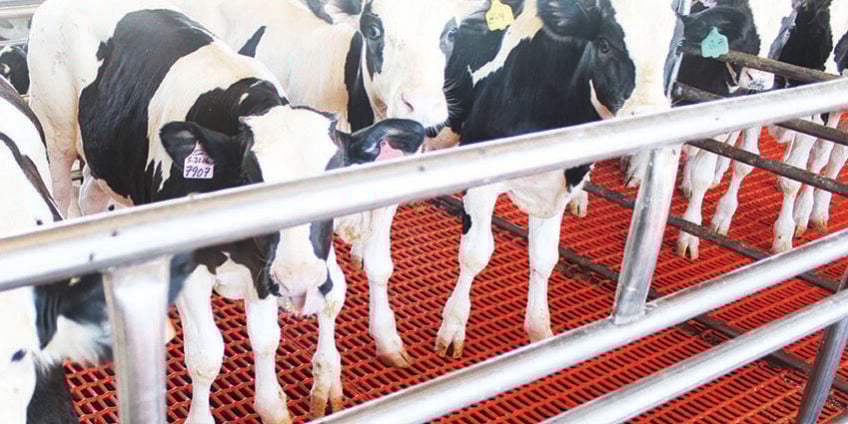
For many operations, raised calf flooring is the missing link between “we try” and “we can actually keep it dry and clean.”
Where Dura Trac fits: practical durability for Midwest winters
At ADA Enterprises, we build Dura Trac with a simple goal: make the calf’s daily environment easier to keep dry, clean, and safe—because that’s what supports health outcomes.
Dura Trac is first-rate steel and completely coated with plastisol (polyvinyl, plastic). No other coating materials are ever used on ADA products.
What that means for your calf program:
- Traction in calf pens you can trust, even when winter boots track in moisture
- A surface designed to be practical for calf housing management—cleaning becomes more consistent when it’s easier
- Support for calf barn hygiene goals by reducing hard-to-clean, moisture-holding problem areas
- A durable, long-term approach that matches the reality of commercial calf care (built to last, not disposable)
No flooring is a magic wand. But the right flooring can remove friction—literally and operationally—so your cleaning and ventilation efforts actually work together.
Common misconceptions to avoid this winter
- “More bedding fixes wet floors.” It helps comfort, but it won’t fix trapped moisture or poor drainage.
- “Cold stress is only about air temperature.” Wet bedding and cold contact surfaces are often the real culprits.
- “Smooth is safer.” Not when it becomes slick—traction matters for calves and people.
- “Mats solve hygiene.” If they trap moisture underneath or slow cleaning, they can work against calf barn environment goals.
- “If scours show up, it must be feeding.” Feeding matters—but don’t ignore environmental causes of calf scours.
Bring it back to the goal: calf comfort that prevents the “later bill”
If you want fewer winter surprises, focus on the basics of calf welfare housing design:
- Dry calves
- Clean contact surfaces
- Good footing
- Fresh air without drafts
- A setup your team can maintain every day
That’s the path to better calf comfort, stronger starts, and fewer “mystery” health events that show up weeks later.
Ready to upgrade your calf pens for winter performance?
If you’re evaluating calf stall flooring or planning improvements to your calf barn environment, ADA Enterprises can help you spec Dura Trac for your facility and management style.
Request a quote through ADA Enterprises, and we’ll help you build a flooring plan that supports cleaner pens, better footing, and a stronger start for every calf.